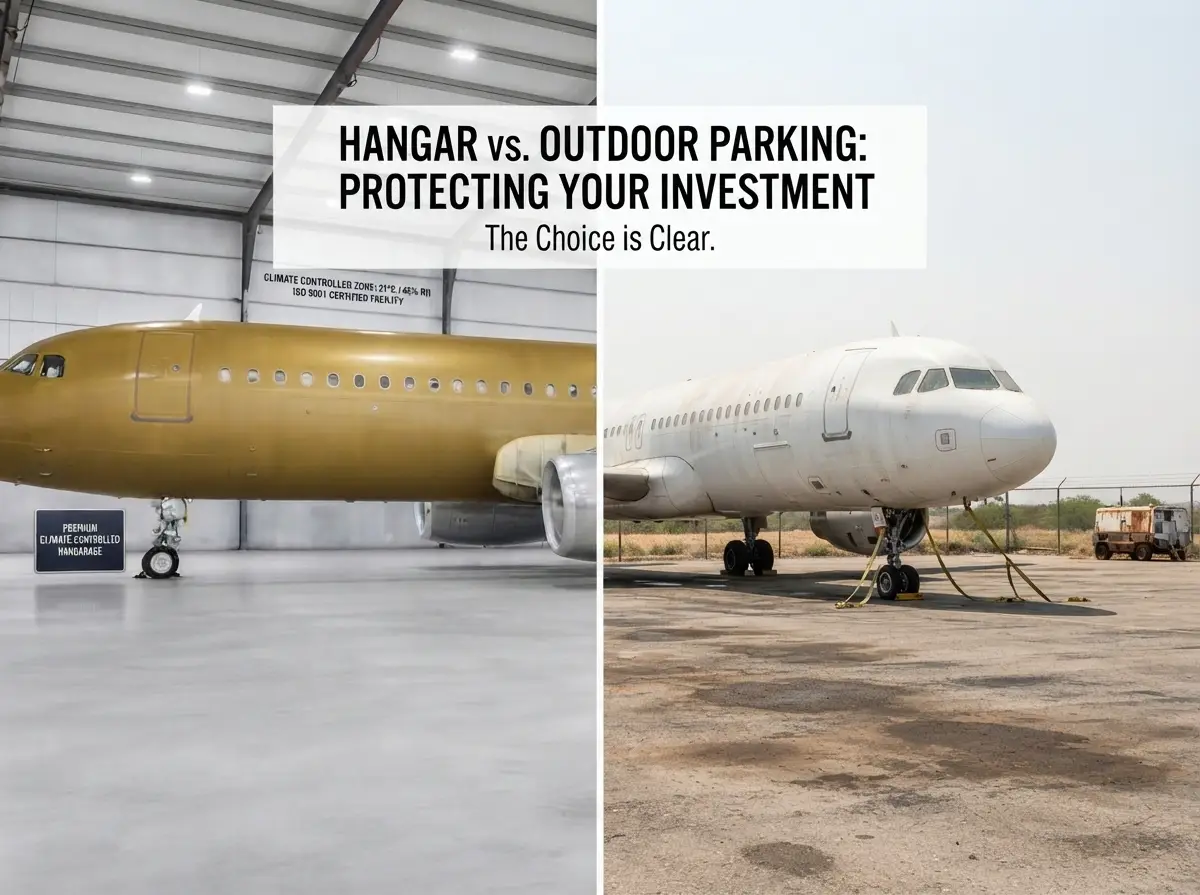
The choice between hangar storage and open-apron parking is usually presented as a cost decision. It is more useful to treat it as a match between how the aircraft is used and how much exposure that use justifies, because the right answer genuinely differs from one operator to the next.
Here is a straight comparison across the factors that actually change the outcome.
1. Environmental exposure
Outdoor parking. The aircraft absorbs everything the climate delivers: direct sun and ultraviolet exposure, daily thermal cycling, airborne sand and dust, rain, humidity and salt-laden air. In the UAE this is a sustained, year-round load rather than a seasonal one.
Hangar storage. Covered storage removes direct ultraviolet exposure, moderates thermal cycling, and dramatically reduces sand and precipitation contact with the airframe.
The practical difference shows up in coating life, seal condition, interior materials and the rate at which corrosion establishes itself. It is not visible week to week. It is very visible across years. For what published guidance says about repaint intervals, see our guide to how often aircraft need refinishing and painting.
2. Cost structure
Outdoor parking carries a lower recurring charge. That is its entire advantage, and it is a real one.
Hangar storage costs more per month and defers or reduces costs elsewhere: paint intervals, corrosion rectification, interior refurbishment, component replacement.
The comparison only becomes meaningful across the holding period. For a short stop, outdoor parking is obviously correct. For an airframe standing for eighteen months, the arithmetic usually points the other way well before the period ends.
3. Security and access control
Outdoor parking at a properly run facility still sits inside the airport perimeter with controlled access, but the aircraft is physically more exposed and more visible.
Hangar storage adds physical enclosure and, at a well-managed facility, tighter documented custody: who entered, when, and under whose authority.
For high-value or high-profile aircraft, the discretion that comes with enclosure is often valued as highly as the physical protection.
For a two-night stop, outdoor parking is the sensible answer. For an aircraft standing for a season, it rarely is.
4. Maintenance burden
Outdoor parking increases routine workload. More frequent washing, more attention to seals and covers, more inspection of areas prone to sand ingress, and more time spent on preparation before flight.
Hangar storage reduces that load and makes work on the aircraft easier, maintenance can be carried out under cover rather than scheduled around weather and heat.
5. Operational readiness
Outdoor parking means longer preparation before departure, particularly after a dust event or during peak summer heat. Cabin cool-down alone is a real consideration.
Hangar storage means the aircraft is cleaner, cooler and closer to ready. For operators flying at short notice, this matters more than it appears on paper.
6. Residual value and presentation
At the point of sale, lease placement or insurance assessment, condition is assessed in detail. Paint, interior and corrosion history all carry weight, and an aircraft with documented covered storage presents differently from an identical airframe that has stood in the open.
This is the factor most often left out of the monthly comparison, and frequently the largest single number in it.
A simple way to decide
Outdoor parking is the right answer when:
- The stop is short: overnight, a few days, transient operations
- The aircraft is flying regularly and not standing for extended periods
- The airframe is robust, older, or already scheduled for refinishing
- Covered capacity is genuinely not available for your dates
Hangar storage is the right answer when:
- The aircraft will stand for weeks or months rather than days
- It is being held pending sale, lease placement or return to service
- Paint and interior condition are commercially important to you
- Discretion and controlled access matter
- You want to reduce preparation time before short-notice departures
- The aircraft is seasonally based and idle for part of the year
Most operators end up using both
In practice the sensible pattern is rarely all-or-nothing. Transient stops go outside. Extended standing periods go under cover. Pre-sale periods go under cover. Seasonal downtime goes under cover.
What makes that workable is a facility that offers both, so the arrangement can flex with the operating pattern rather than forcing a single decision for the year. If you are moving towards covered storage, our checklist for leasing hangar space in the UAE covers what to confirm before signing.
Dolphin Air provides covered hangar storage and supervised outdoor parking at Sharjah International Airport, with direct airside access inside the SAIF Zone. If you are weighing the two for a specific airframe and set of dates, our operations team will give you a straight assessment of what makes sense.


