Ask most owners how they chose where to keep their aircraft and the answer comes back in terms of availability and monthly cost. Both matter. Neither is the reason the decision is worth thinking hard about.
Hangar storage is an asset-protection decision. The airframe sitting on that apron is a multi-million-dollar asset with a residual value that a buyer, a lessor or an insurer will one day assess in detail. What happens to it between flights determines a meaningful part of what that assessment concludes, and in a Gulf climate, what happens between flights is not neutral.
What the environment actually does to a parked aircraft
The UAE presents a combination of conditions that is unusually hard on aircraft: sustained high ambient temperatures, intense ultraviolet exposure, airborne sand and dust, coastal humidity, and salt-laden air. Any one of these is manageable. Together, and sustained across years, they compound.
Thermal cycling and ultraviolet exposure
Surface temperatures on an aircraft standing in direct sun climb well beyond ambient air temperature, and then fall again overnight. That daily expansion and contraction works continuously on sealants, fasteners, window seals and composite bond lines. Ultraviolet exposure attacks the coating system directly, paint chalks, clear coats craze, and the protective film begins to break down.
Inside the cabin the same physics applies to materials never designed for it. Leather dries and splits. Veneers lift. Adhesives soften. Avionics and cabin systems sit through thermal cycles that shorten their service life without ever producing a discrete failure you could point to.
Sand and particulate ingress
Airborne sand is abrasive and it travels. It accumulates in control surface gaps, hinge points, intakes, static ports and pitot systems. On a covered aircraft this is a housekeeping matter. On an aircraft standing in the open through a shamal, it is a maintenance one.
Humidity, salt and corrosion
Coastal humidity combined with salt-laden air produces exactly the conditions corrosion needs. It begins in the places hardest to inspect: lap joints, fastener heads, drain paths, the underside of the belly fairing, and by the time it is visible during a routine walk-around, the affected area is usually considerably larger than it looks.
None of this shows up as a single event. It accumulates quietly, and then presents all at once, as an unplanned maintenance bill, or as a valuation you did not expect.
Why the cost comparison is usually framed wrongly
The instinctive comparison is monthly hangar storage against monthly outdoor parking. It is the wrong comparison, because it puts a known recurring cost against an unknown deferred one and then treats the unknown as zero.
The honest comparison runs across the full period you intend to hold the aircraft, and includes:
- Paint life. A repaint is a substantial, schedule-disrupting expense. Covered storage extends the interval between them. Our guide to how often aircraft need repainting covers what sets that interval.
- Corrosion rectification. Found early, it is a manageable job. Found late, it becomes structural work with downtime attached.
- Interior condition. Cabin refurbishment is expensive and heavily weighted in how a buyer assesses an aircraft.
- Component life. Seals, sensors and avionics subjected to years of thermal cycling do not last as long.
- Residual value. An aircraft with documented covered storage and consistent presentation commands a stronger position at sale.
Run over a realistic ownership period, the gap between the two figures narrows considerably, and frequently reverses.
What actually distinguishes one hangar from another
Not all covered storage is equivalent. When assessing a facility, the questions worth asking are less about the building and more about how it is run.
Access control and custody
Who can reach your aircraft, and is that recorded? A facility that can tell you precisely who has had access to your airframe, when, and under whose authority is operating to a different standard than one where the hangar door is simply open during working hours.
Movement discipline
Most hangar damage happens during towing and positioning, not during storage. Ask how movements are supervised, who performs them, and how they are documented.
Fire safety and contractor control
A hangar containing several aircraft and multiple contractors carries genuine risk. Defined fire-safety standards and controlled contractor activity are what stops one party’s poor practice becoming everyone’s loss.
Airside access
A facility inside the airport perimeter means the aircraft moves between apron and hangar without public-road transit. Every additional movement is an additional opportunity for damage. Fewer is better.
Matching the arrangement to how you actually operate
- Seasonal operations: covered storage during the months the aircraft is not flying.
- Between operational cycles: protected storage while awaiting a maintenance input, a lease placement or return to service.
- Pre-sale: presentation matters enormously at point of sale, and covered storage protects it.
- Transient: supervised outdoor parking is entirely adequate for short stops.
The decision in one line
Hangar storage is not a parking cost. It is the difference between an asset that is maintained and one that is merely stored, and that difference eventually appears in a maintenance invoice, a valuation, or both.
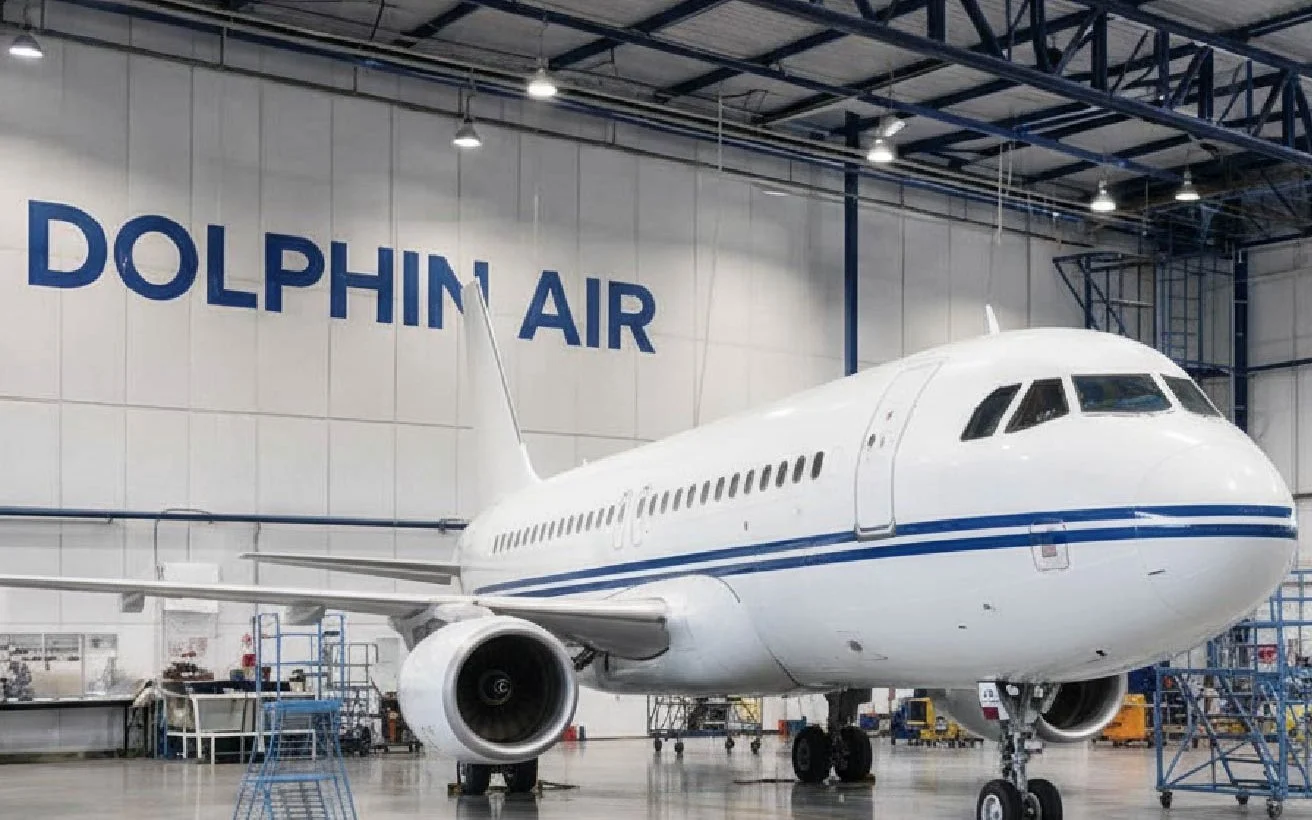
Dolphin Air has provided covered hangar storage and supervised outdoor parking at Sharjah International Airport since 1996, with direct airside access inside the SAIF Zone aviation cluster. If you are weighing storage options for an aircraft in the UAE, our operations team can talk you through what is available for your airframe and dates.


